A 4G router is cellular uplink plus full routing: with a data card it dials, hands out IPs and performs NAT by itself, splitting the network among many clients; a phone hotspot only shares a handset's data temporarily.
4G routers and 4G CPEs overlap: pick a 4G router for full routing and multi-user access; pick a CPE for more ports and running mobile as long-term fixed broadband for cameras and POS.
Whether it works starts with bands and carrier lock: confirm the country, carrier and required bands before ordering, and check whether the slot is nano or micro.
Models in this category
View all 216 models →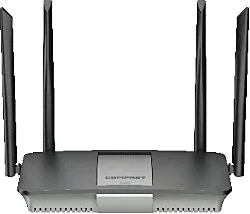
CF-AX3000
Wireless Router CF-AX3000 with 3000Mbps wireless rate and 2.4/5.8GHz dual-band, supports IEEE802.11 a/b/g/n/ac/ax, External 4*5dBi, dimensions 176*248*186mm, DC12V,1.5A Adapter, for home and small office networking.
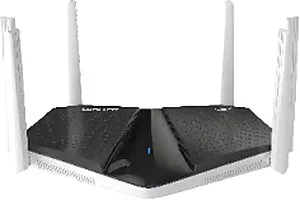
CF-BE6400
Wireless Router CF-BE6400 with 6400Mbps wireless rate and 2.4/5.8GHz dual-band, supports IEEE802.11a/b/g/n/ac/ax/be, 6*4dBi, dimensions 244*150*135mm, DC12V,1.5A Adapter, for home and small office networking.
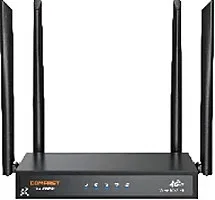
CF-E15
Wireless Router CF-E15 with 2.4GHz: 300Mbps wireless rate, External 4*5dBi antenna, dimensions 220*122*171mm, for home and small office networking.
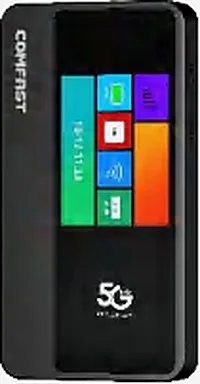
CF-E18
Wireless Router CF-E18 with 2.4GHz: 286.8Mbps 5.8GHz: 600Mbps wireless rate, Build in antenna, dimensions 131*68*17mm, for home and small office networking.
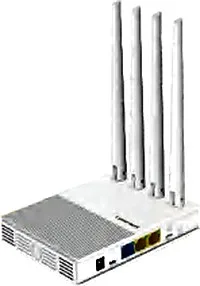
CF-E3 V3
Wireless Router CF-E3 V3 with 2.4GHz: 300Mbps wireless rate, External 4*5dBi antenna, dimensions 150*110*26mm Antenna: 175mm, for home and small office networking.
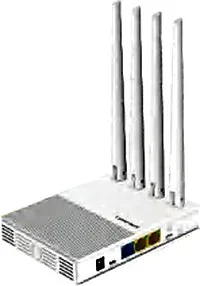
CF-E4
Wireless Router CF-E4 with 2.4GHz: 300Mbps5.8GHz: 450Mbps wireless rate, External 4*5dBi antenna, dimensions 150*110*26mm Antenna: 175mm, for home and small office networking.
CF-E5
Wireless Router CF-E5 with 2.4GHz: 300Mbps wireless rate, External 2*5dBi antenna, dimensions 353*85*44mm, for home and small office networking.
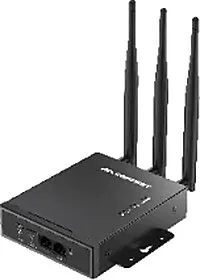
CF-E7
Wireless Router CF-E7 with 2.4GHz: 300Mbps wireless rate, External 3*5dBi antenna, dimensions 323*105*31mm, for home and small office networking.
CF-ER10
Wireless Router CF-ER10 with 300Mbps wireless rate and 2.4GHz single-band, supports IEEE802.11 a/b/g/n, dimensions Size 186*110*223mm, DC5V,1A, for home and small office networking.
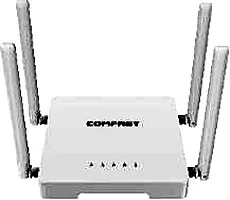
CF-N1 V2
Wireless Router CF-N1 V2 with 300Mbps wireless rate and 2.4/5.8GHz dual-band, supports IEEE802.11 a/b/g/n/ac, External 4*5dBi, dimensions 160*160*168mm, DC5V,1A Adapter, for home and small office networking.
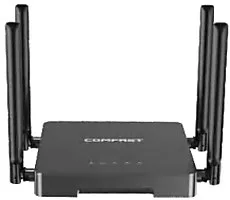
CF-N5 V2
Wireless Router CF-N5 V2 with 1200Mbps wireless rate and 2.4/5.8GHz dual-band, supports IEEE802.11 a/b/g/n/ac, External 4*5dBi, dimensions 160*160*168mm, DC12V,1A Adapter, for home and small office networking.
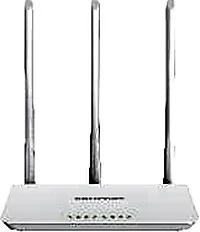
CF-WR613N V1
Wireless Router CF-WR613N V1 with 300Mbps wireless rate and 2.4GHz single-band, supports IEEE802.11 a/b/g/n, External 3*5dBi, dimensions 186*110*223mm, DC5V,1A Adapter, for home and small office networking.
Related pages
01 What a 4G router is: more than SIM internet
A 4G router is a wireless router with its own cellular uplink: it has a built-in 4G module and SIM slot, joins the mobile network itself, and keeps full routing — dial-up, NAT address translation, DHCP, multi-user access and Wi-Fi distribution. In other words it is not a '4G-to-Wi-Fi adapter' but a local gateway that reaches the internet on its own and then splits the network among individual clients. Our CF-E15, CF-E3 V3 and CF-E4 (nano SIM slots) and CF-E5 and CF-E7 (micro SIM slots) are all of this kind: insert a data card, power up, and the link is live.\n\nBecause what it does is routing, the emphasis is never a single connection but many users and clients online at once: whoever can dial, hand out IP addresses and translate and isolate addresses per client is the router. This is the fundamental dividing line from a phone hotspot, and it decides whether the device can serve as a network over the long run.\n\nMany projects use 4G router, 4G CPE and phone hotspot interchangeably. The difference is not whether they can get online, but who does the routing, how many devices they carry and whether they can be deployed fixed for the long run.
02 4G router vs 4G CPE vs phone hotspot
| Item | 4G router (SIM) | 4G CPE | Phone hotspot |
|---|---|---|---|
| Purpose | A complete local network: cellular uplink plus full routing and Wi-Fi | Treat mobile as fixed broadband; serve device-type clients such as cameras and POS | Briefly share a handset's data with a few devices |
| Routing and NAT | Does dial-up, NAT and DHCP itself | Often includes routing and NAT, model-dependent | Done by the phone OS, with few settings |
| Multi-user and capacity | Built for many clients online long-term, in the dozens | Built for always-on devices such as cameras and POS | A handful to about a dozen, depending on the phone |
| Wired ports | WAN plus several LAN, able to feed a switch or AP | Usually more LAN, some with WAN | Essentially none |
| Power and deployment | Mains-powered, suited to long-term fixed installs | Mains-powered, long-term fixed deployment | Relies on phone battery |
| Management | Full router management: APN, port mapping, auto-redial and more | Device-level settings such as APN and auto-redial | A few settings in the phone OS |
The three often work together: a 4G router serves multi-user access, a CPE is better for bringing mobile in as fixed broadband for devices, and a phone hotspot only suits a stopgap.
03 WAN/LAN and wired backup: keeping 4G as the last resort
One of the most practical differences between a 4G router and a phone hotspot is that it has real wired ports — a WAN port for the uplink and several LAN ports downward for switches, APs, cash registers or PCs. That makes it stand up in two situations: with no fixed line at all, 4G carries the uplink; with a fixed line, the broadband goes to WAN and 4G becomes the backup path — wired first, 4G as fallback.\n\nFailover is worth it for one reason: no outage. When the main broadband fails, the device switches to 4G automatically and the services that must not stop — POS, cameras, access control, front desk — stay online; when the main line recovers it switches back and saves the 4G data. Before ordering, confirm which uplinks the model supports and whether automatic failover can be set, and plan a backup data plan and billing so the data does not run out during a fault.\n\nThe LAN ports decide how big the internal network can get: add a switch when there are too few, and to cover a floor let the router handle the uplink and routing while ceiling or in-wall APs handle coverage — do not expect one box to blanket everything. Our CF-E15, CF-E3 V3 and CF-E4 each offer 1xWAN plus 2xLAN, while CF-E5 and CF-E7 offer 1xWAN plus 1xLAN; pick by how many devices you must connect.
04 SIM and bands: four things to confirm before ordering
- Bands come first: the same card rides different bands in different countries, and support decides whether it works at all. Send us the country, carrier and required bands and we check model by model.
- Read the standard: 4G is a loose term covering FDD-LTE, TDD-LTE and more. Real throughput depends on local coverage and the band mix, not on the word 4G alone.
- SIM size: our SIM routers use nano SIM (CF-E15, CF-E3 V3, CF-E4) or micro SIM (CF-E5, CF-E7). Check the marking by the slot before swapping cards, and do not cut a card to fit.
- Carrier lock and APN: some carrier-customised units are locked to a network or an APN and need the carrier to unlock them first. Bring the link up with the APN name, username and password your carrier provides.
- Backup data plan: for a failover link, plan the 4G plan and billing up front so the data does not run out while the main line is down.
05 Antennas, signal and placement
- Antenna type sets the coverage shape: built-in antennas (such as on CF-E18) are tidy and suit close desk use, while external omni antennas (the 4x5dBi on CF-E15, CF-E3 V3 and CF-E4) help with wall penetration and some distance.
- Placement often beats hardware: put the router near a window and high up, away from metal cabinets, thick concrete and high-power appliances, and the signal usually improves visibly.
- Antenna count is for diversity: several antennas improve stability, but their angle and spacing matter too — do not crowd them all together.
- Test before sizing: real experience is also capped by the carrier's uplink and signal quality, so test on site before deciding on an outdoor antenna or a new mounting point.
- To cover a floor, pair a 4G router with APs: the router handles the uplink and routing while ceiling or in-wall APs do the coverage — do not expect one box to blanket a whole floor.
06 Client capacity and concurrency: match to the rate class
| Wireless rate class | Typical models | Rough capacity | Suited to |
|---|---|---|---|
| Single-band 2.4GHz 300Mbps | CF-E15 / CF-E3 V3 / CF-E5 / CF-E7 | Around a dozen clients (varies with traffic mix) | Home, small shop and temporary points: everyday browsing and a few devices |
| Dual-band 2.4G plus 5.8G (about 450–600Mbps) | CF-E4 / CF-E18 | More clients, including video traffic | Small office and sublet: somewhat more clients needing 5GHz offload |
Size by concurrency, not the headline: the vendor's maximum associated clients is a theoretical figure and real usable concurrency depends on the traffic mix (browsing, video and scanning differ greatly). When one unit is not enough, let several APs share coverage and concurrency rather than cranking up one unit's power.
07 Typical scenarios: shops, sublets, temporary offices and branch backup
- Shops: when broadband is not in yet or the main line should not be shared with the landlord, a 4G router gives the store its own network, so POS, scanning and cameras sit on their own segment; traffic concentrates in business hours, so watch the plan and bandwidth.
- Sublet flats: with one unit let to several tenants, a SIM router gives each unit its own network so it never mixes with a neighbour's segment, and it is easy to reclaim when they leave.
- Temporary offices, exhibitions and flash stores: network for a few days to a few weeks, live as soon as the card is in and power is on — faster than a leased line and just as quick to pack away.
- Branch backup: where a store or branch already has broadband, set a 4G router as the backup path — wired first, 4G fallback — so POS, access control and cameras never drop when the main line fails.
- Remote small points: gatehouses, barriers and temporary booths with no cable run, where a 4G router brings the network in and then distributes it locally.
08 Selection table: our SIM router models
| Model | Wireless rate | Antenna | Ports and SIM slot | Typical use |
|---|---|---|---|---|
| CF-E15 | 2.4GHz: 300Mbps | External 4x5dBi | 1xWAN + 2xLAN 10/100M, nano SIM, Type-C | Home and small-shop SIM internet |
| CF-E3 V3 | 2.4GHz: 300Mbps | External 4x5dBi | 1xWAN + 2xLAN 10/100M, nano SIM, micro USB | Small office with several wired devices |
| CF-E4 | 2.4G: 300Mbps + 5.8G: 450Mbps | External 4x5dBi | 1xWAN + 2xLAN 10/100M, nano SIM, micro USB | Home and small-office dual-band |
| CF-E5 | 2.4GHz: 300Mbps | External 2x5dBi | 1xWAN + 1xLAN 10/100M, micro SIM | Desk-level single-port SIM internet |
| CF-E7 | 2.4GHz: 300Mbps | External 3x5dBi | 1xWAN + 1xLAN 10/100M, micro SIM | Desk SIM internet, light deployment |
| CF-E18 | 2.4G: 286.8Mbps + 5.8G: 600Mbps | Built-in antenna | SIM slot, Type-C | Desk dual-band, portable light deployment |
Figures come from our product data; the factory's latest spec governs. Confirm bands, network standards and carrier compatibility with us before ordering. More SIM CPEs are under /cpe/4g-cpe/.
09 Procurement points: confirm each item before ordering
- Uplink: is there no fixed line at all, or a broadband line that needs backup? This decides whether 4G is primary or fallback.
- Bands and standard: send us the country, carrier and required bands for a model-by-model check, and confirm the 4G standard (FDD/TDD-LTE) too.
- SIM slot: nano (CF-E15, CF-E3 V3, CF-E4) or micro (CF-E5, CF-E7), and whether unlocking is needed.
- Port count and speed: how many LAN ports for switches, APs or cash registers, and whether the ports are 100M or higher; both the uplink and the internal devices must be fed.
- Whether failover is needed: confirm support for a wired uplink plus 4G fallback, and plan a backup data plan.
- Wireless class and bands: single-band 2.4GHz or dual-band (2.4 plus 5.8), chosen by client count and whether 5GHz offload is needed.
- Antennas and mounting: built-in or external, how many, at what dBi, and desk, wall or fixed install, chosen by the site.
- Power and adapters: note each model's DC adapter spec and confirm it with the kit.
10 Next step: from a 4G router to the whole network
A single 4G router answers where the network comes from and how it is split; to spread coverage you add APs behind it. Start with the /router/ overview to fix the overall routing logic; when you have a fixed line and need higher port speed and internal throughput, see the gigabit routers under /router/gigabit-router/; when you need more ports and will run mobile as long-term fixed broadband for cameras and POS, see the SIM CPEs under /cpe/4g-cpe/. Send us the country, carrier, required bands, uplink type (4G or wired) and expected client count, and we will check model by model before quoting.
Questions
Q1 What is the difference between a 4G router and a 4G CPE?
Both use a SIM to turn 4G into a local network; they differ in whether routing is complete and in form factor. A 4G router (CF-E15, CF-E3 V3, CF-E4, CF-E18 and similar) usually includes full dial-up, NAT, DHCP and Wi-Fi — routing plus cellular — aimed at multi-user access; a CPE emphasises bringing the upstream network in, and some models only provide access while routing is handled by a downstream gateway, often with more ports. Pick a 4G router for full routing and multi-user access; pick a CPE when mobile is long-term fixed broadband for cameras, POS and many workstations.
Q2 How does a 4G router differ from a phone hotspot?
The key is who does the routing and how many devices it carries. A phone hotspot temporarily shares one handset's data, with routing, addressing and limits handled by the phone OS, typically carrying a handful to about a dozen clients and relying on the phone battery — fine for an emergency. A 4G router takes its own data card and does dial-up, NAT and DHCP itself, has real WAN/LAN ports for switches and APs, serves dozens of clients at once, and runs on mains power as a long-term fixed install. Use a 4G router to run a network long-term; a phone hotspot is enough for a one-off stopgap.
Q3 Can a 4G router act as a backup for a wired line?
Yes, provided the model supports a wired uplink plus 4G fallback and automatic failover. Take the broadband into WAN and set 4G as the backup path to wired-first, 4G-fallback: when the main line fails it switches to 4G so POS, access control and cameras stay online, and switches back when the line recovers. Confirm the uplinks and failover capability before ordering, and plan a backup data plan and billing so the data does not run out during a fault.
Q4 What if the 4G signal is poor?
Fix placement before hardware: put the router near a window and high up, away from metal cabinets, thick concrete and high-power appliances — usually more effective than swapping antennas. If that is not enough, consider a model with external high-gain antennas, or move to an outdoor antenna or an outdoor CPE point. Note that real experience is not just about signal bars: the carrier's bands and uplink are also a ceiling, so test on site before committing to a scale. If long-term coverage is needed, use the 4G router for the uplink and add ceiling APs indoors.
Tell us your coverage goal, uplink type (4G or wired), country and carrier, required bands and expected client count and we will check model by model before quoting. For a whole-network design, pick layer by layer from the 4G Router (/router/4g-router/) to the Gigabit Router (/router/gigabit-router/) and SIM CPE (/cpe/4g-cpe/), or return to the /router/ overview for the overall routing logic.