An outdoor CPE sits outside the building, carrying the weather with an IP66/IP67 shell, pole mounting and earthing plus surge protection
Power decides reach: keep PoE within 100 m, and use solar with a low-draw model where there is no mains
Weak signal is a siting and external-antenna problem first, a model choice second; confirm SIM bands and carrier before ordering
Models in this category
View all 216 models →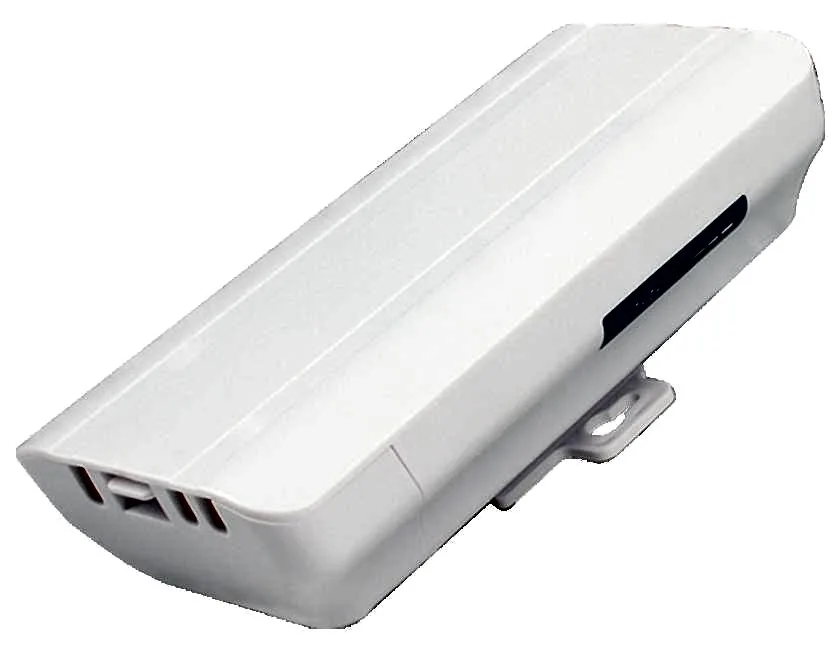
BS-300D
Wireless Bridge / CPE BS-300D with 300Mbps wireless rate and 2.4G single-band, 24V PoE, for point-to-point links between buildings, cranes and elevators.
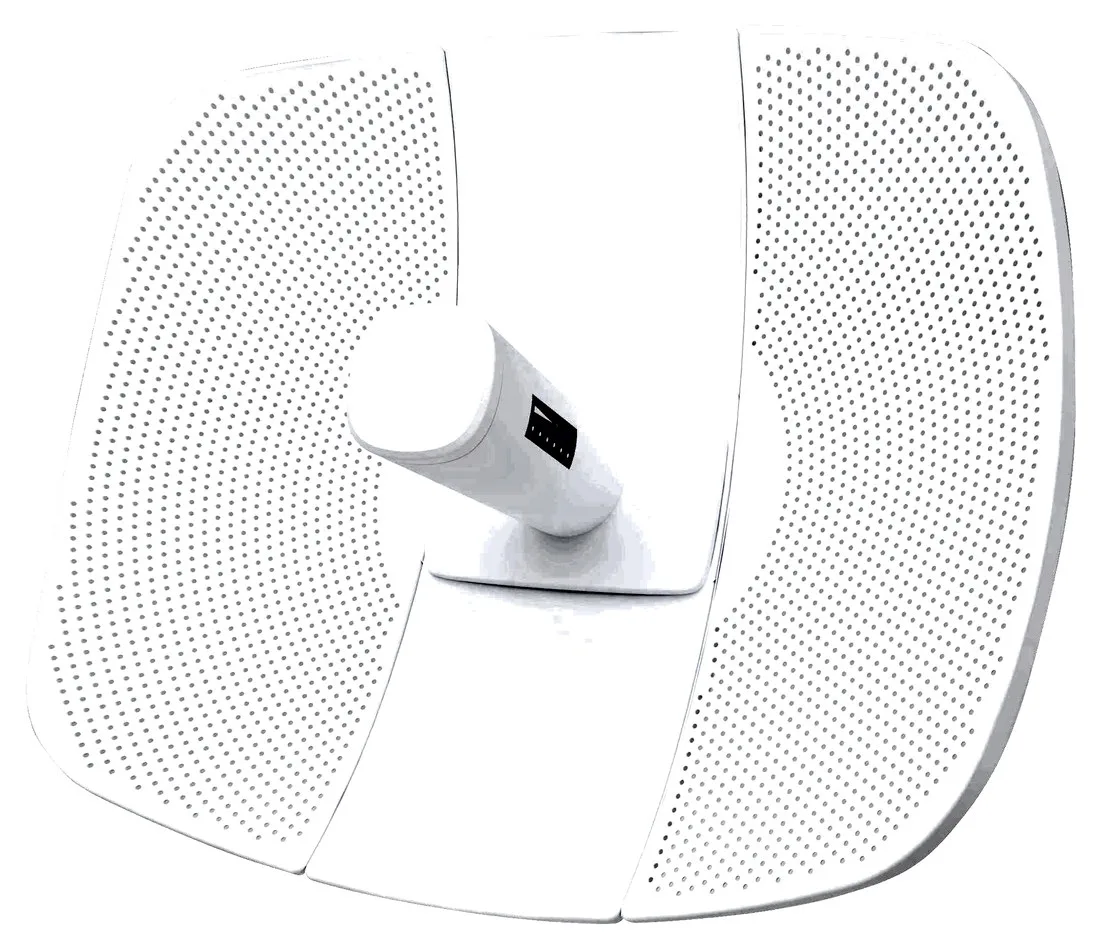
BS-500L
Wireless Bridge / CPE BS-500L with 300Mbps wireless rate, dimensions 395*340*250mm, 24V PoE, for point-to-point links between buildings, cranes and elevators.
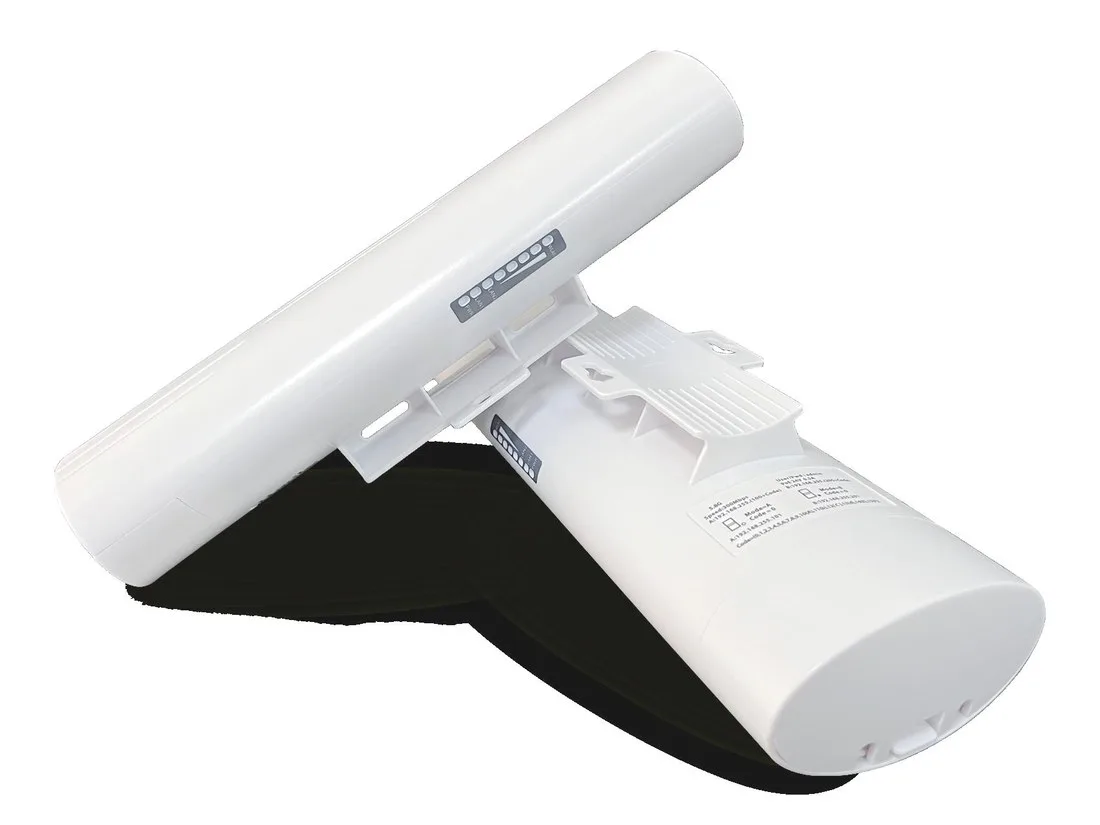
BS-500T
Wireless Bridge / CPE BS-500T with 300Mbps wireless rate, 24V PoE, for point-to-point links between buildings, cranes and elevators.
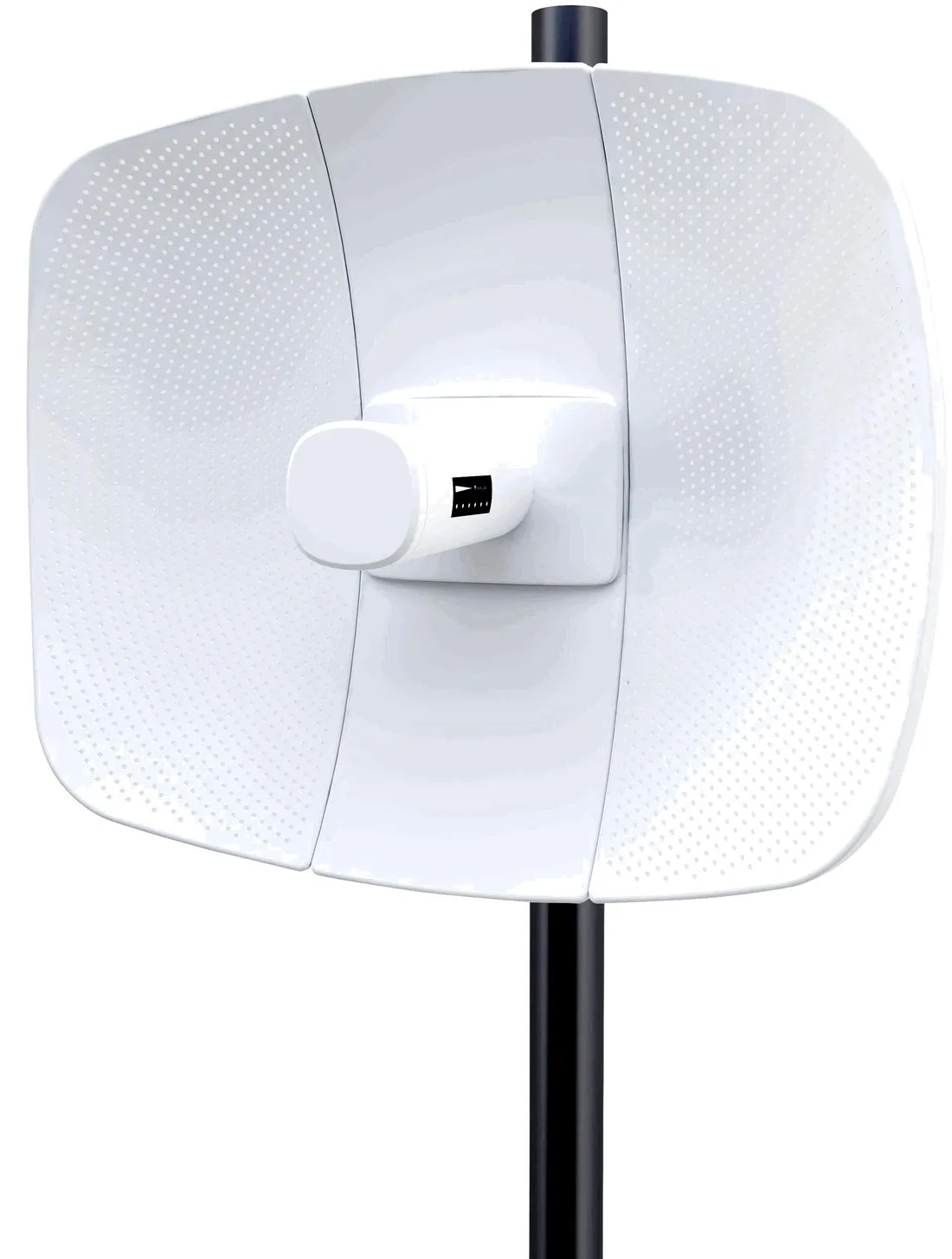
BS-560L
Wireless Bridge / CPE BS-560L with 900Mbps wireless rate, dimensions 395*340*250mm, 24V PoE, for point-to-point links between buildings, cranes and elevators.
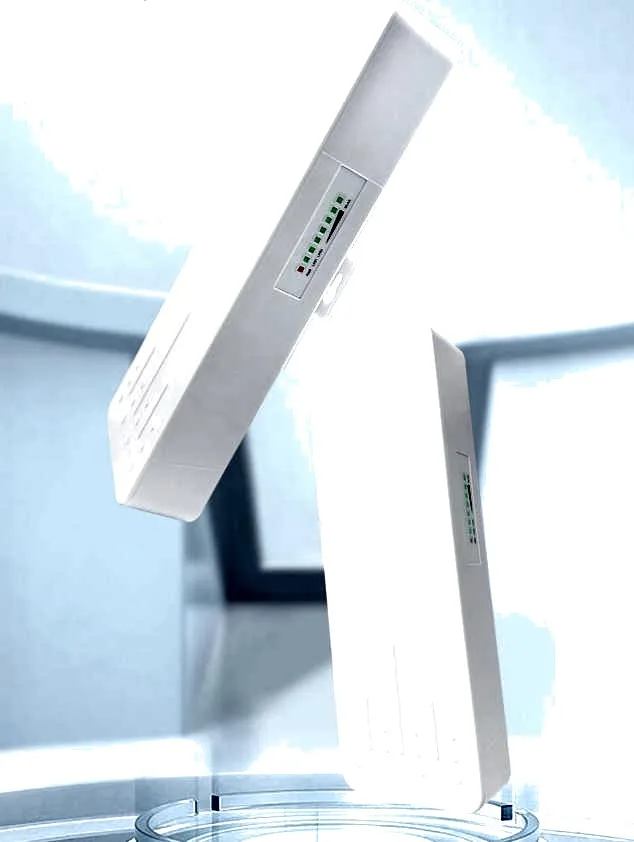
BS-900
Wireless Bridge / CPE BS-900 with 900Mbps wireless rate, dimensions 250*90*60mm, 24V PoE / 12V DC, for point-to-point links between buildings, cranes and elevators.
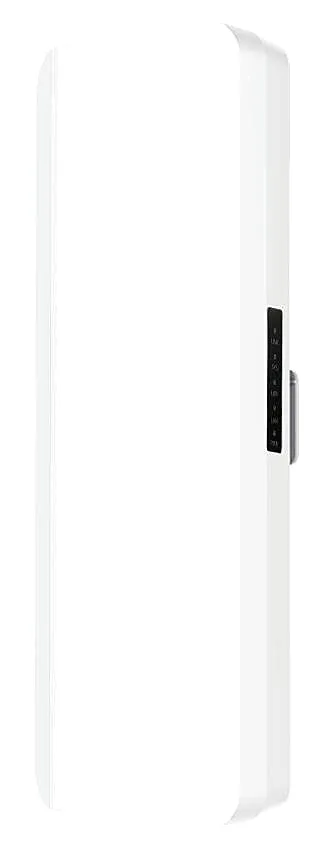
BS-900D
Wireless Bridge / CPE BS-900D with 900Mbps wireless rate, 24V PoE / 12V DC, for point-to-point links between buildings, cranes and elevators.

BS-900G
Wireless Bridge / CPE BS-900G with 900Mbps wireless rate, 24V PoE / 12V DC, for point-to-point links between buildings, cranes and elevators.

BS-900M
Wireless Bridge / CPE BS-900M with 900Mbps wireless rate, 24V PoE / 12V DC, for point-to-point links between buildings, cranes and elevators.
CF-E11
Wireless Bridge / CPE CF-E11 with 2.4GHz: 300Mbps wireless rate, External 4*5dBi antenna, dimensions 150*110*26mm Antenna: 175mm, for point-to-point links between buildings, cranes and elevators.
CF-E112N V2
Wireless Bridge / CPE CF-E112N V2 with 300Mbps wireless rate and 2.4GHz single-band, supports IEEE802.11b/g/n, bulit in9dBi Antennas, dimensions 165*85*43.5mm, for point-to-point links between buildings, cranes and elevators.
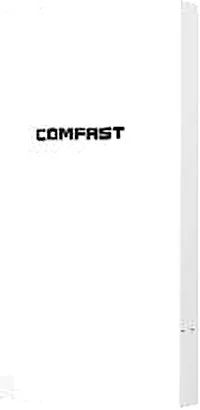
CF-E113A V2
Wireless Bridge / CPE CF-E113A V2 with 300Mbps wireless rate and 5.8GHz dual-band, supports IEEE802.11b/g/n, bulit in 9dBi Antennas, dimensions 165*95*51mm, for point-to-point links between buildings, cranes and elevators.
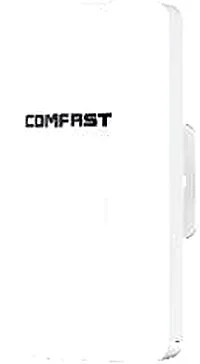
CF-E120A V3
Wireless Bridge / CPE CF-E120A V3 with 300Mbps wireless rate and 5.8GHz dual-band, supports IEEE802.11b/g/n, bulit in 5.8Ghz: 11dBi Antennas, dimensions 165*95*51mm, for point-to-point links between buildings, cranes and elevators.
Related pages
01 What an outdoor CPE is, and how it differs from an outdoor AP
An outdoor CPE is a wireless gateway in an outdoor enclosure: it turns an uplink (a wired Ethernet port, or the mobile network on a SIM model) into a local network that runs outdoors long-term — Ethernet for cameras, barriers and weather stations, Wi-Fi for patrol staff, handhelds and visitors. It uses the same logic as an indoor CPE; everything different is the shell and environmental tolerance: protection rating (IP66 common, IP67 on multi-radio high-power models), a pole- or wall-mount structure, a working range around -10C to 55C, and outdoor earthing and surge design. Against an outdoor AP the emphasis differs: an outdoor AP is about coverage over a wired backhaul, while an outdoor CPE is about getting the network to the point itself — often one cable or one SIM brings a site online, and packing up is just as quick.
02 Typical scenarios: sites, orchards, temporary camps and remote access
- Construction sites: tower-crane and gate cameras plus the site office need internet and there is no fixed line — an outdoor CPE mounts on the pole and comes up on PoE. Watch dust and the stability of temporary power.
- Orchards and farms: large, cabled-free areas — use outdoor CPEs as the backbone to bring pump houses, weather stations and cameras onto one network.
- Temporary resettlement and relief camps: fast to bring up and needing wide coverage — the outdoor CPE carries the uplink and indoor ceiling or in-wall APs cover room by room.
- Remote access: mountains, islands, mines and farm watch points, where cabling is costly or impractical — the outdoor CPE does the last mile.
- Campuses and public places: parks, communities, schools and factories use outdoor CPEs as backbone or fill-in points alongside indoor APs.
- Scenic areas and pop-up events: for a few days of racing or a market, an outdoor CPE plus portable power stands up a network quickly and comes down as fast.
03 Protection rating and installation: pole mount, waterproofing, earthing, surge
| Item | Practice | Notes |
|---|---|---|
| Protection rating | Usually IP66; pick IP67 for multi-radio, high-power or long-exposed points | Higher digits mean more dust/water resistance; IP67 survives brief immersion |
| Mounting | Pole or wall mount with clamps, antennas up and connectors down | Routing downwards lets water run off the cable, not pool at the connector |
| Waterproofing | Seal cable and antenna joints with waterproof tape or connectors; add a gland at the cable entry | Joints are the first place water enters and signal drops |
| Earthing | Bond the chassis earth terminal to equipotential earth and connect the pole to the earthing electrode | The basic path for lightning and static discharge |
| Surge protection | Fit a network surge arrester on the incoming line and prefer models marked for surge protection | Mandatory for outdoor and elevated points |
These are general outdoor practices; the site conditions and local electrical codes govern.
04 Power: PoE distance and solar scenarios
- PoE first: most of our outdoor models run on 48V or 24V PoE (for example CF-EW71 V2 at 48V/0.32A and CF-EW81 at 24V/0.5A), so one cable carries power and data.
- Distance: keep the PoE run within 100 m on Cat5e/Cat6; beyond that, or on thin cable, the voltage drop is pronounced — power locally or add a repeater rather than stretching it.
- Do not mix voltages: 24V and 48V models are not interchangeable, and the wrong supply may fail to boot or damage the unit — follow the label and the bundled adapter.
- Solar scenarios: without mains, power the unit from a panel plus battery and controller, and prefer a low-draw model (our outdoor units mostly sit in the 8-18W range), sizing panel and battery to local sunshine and the run-time days you need.
- Weather and battery: the controller must supply 24V/48V PoE or work with a PoE injector, and remember battery capacity falls in the cold — leave margin for winter run-time.
- Temporary versus permanent: a portable supply can get a temporary point running, but a permanent point should have fixed solar or local mains so nobody is swapping batteries.
05 SIM and external antennas: two keys to outdoor signal
- Outdoor 4G CPE: at a remote point with no broadband, use a SIM (4G/LTE) outdoor CPE as the uplink to turn the mobile network into outdoor Ethernet and Wi-Fi. Confirm country, carrier and required bands beforehand — see /cpe/4g-cpe/.
- Why external antenna ports matter: outdoor signal is shaped by terrain and obstruction, and with an external port (SMA and similar) you can raise the antenna, aim it at the tower or switch to a directional one — often more effective than changing the whole unit.
- Siting beats hardware: raise the unit and antenna and keep them clear of metal roofs and obstructions before reaching for a higher-gain antenna.
- Waterproof the antenna joint: outdoor antenna ports need the same treatment — point the connector down and wrap it in waterproof tape so water cannot seep into the coax.
- Wi-Fi antenna orientation: keep omni antennas vertical for coverage and space multiple antennas so they do not shadow each other.
06 Temperature, reliability and acceptance checks
| Check | What to look at |
|---|---|
| Enclosure and sealing | No damage to the shell; waterproof joints and glands in place; connectors facing down |
| Earthing and surge | Earth terminal continuous, arrester fitted, equipotential bonding correct |
| Power | Voltage and power at the device match the label; cable length within limits |
| Temperature | Working range within spec (our outdoor units are mostly -10C to 55C); read chassis temperature and stability at midday heat |
| Performance | On-site speed, latency and loss testing, measured at the coverage edge |
| Reliability | Note the MTBF figure (over 250,000H on many models) and power-cycle a long-running point |
| Failover test | With a primary and backup link, prove the automatic failover actually works |
Outdoor models commonly run from -10C to 55C, store at -40C to 70C and tolerate 10-90% non-condensing humidity. High-latitude winters and tropical midday are the two extremes — factor local extremes into the choice and shade points in direct sun.
07 Selection table: our outdoor CPE and bridge models
| Model | Wireless rate | Band | Antenna | Ports | Power | Protection |
|---|---|---|---|---|---|---|
| CF-EW71 V2 | 300Mbps | 2.4GHz | External 2x5dBi | 1xLAN + 1xWAN 10/100M | 48V/0.32A PoE | IP66 |
| CF-EW72 V2 | 1200Mbps | 2.4/5.8GHz | External 2x5dBi | 1xGbE LAN + 1xGbE WAN | 48V/0.32A PoE | IP66 |
| CF-EW74 V3 | 1200Mbps | 2.4/5.8GHz | External 2x5dBi | 1x10/100M WAN/LAN | 48V/0.32A PoE | IP66 |
| CF-EW75 V2 | 1200Mbps | 2.4/5.8GHz | External 2x5dBi | 1xGbE WAN/LAN | 24V/1A PoE | IP66 |
| CF-EW81 | 300Mbps | 2.4GHz | External 2x5dBi | 2xLAN + 1xWAN 10/100M | 24V/0.5A PoE | IP66 |
| CF-EW82 | 1200Mbps | 2.4/5.8GHz | External 2x5dBi | 1xGbE WAN/LAN | 48V/0.32A PoE | IP66 |
Figures come from our product data; the factory's latest spec governs. For IP67 protection, higher gain or more antennas see /access-point/outdoor-access-point/; for indoor coverage pair ceiling APs such as CF-E537AC, CF-E550AC, MQ-3002 and WA-670.
08 Next step: from overview to sub-pages
Start with the /cpe/ overview to fix the product form, then split by uplink: if you have a broadband cable and just need the network delivered to an outdoor point, use the outdoor CPE on this page; if there is no cable and the uplink is mobile, see the SIM options under /cpe/4g-cpe/; if coverage outdoors with high-gain multiple antennas or a higher protection rating is the priority, move to the outdoor APs under /access-point/outdoor-access-point/. Send us the country, carrier, required bands, site conditions and power available, and we will check model by model before quoting.
Questions
Q1 What is the difference between an outdoor CPE and an outdoor AP, and which should I choose?
An outdoor CPE is about getting the network to a point: its uplink can be a cable or, on SIM models, the mobile network, and it usually has routing and more ports. An outdoor AP is about coverage over a wired backhaul. Both are built for outdoors (IP66/IP67, pole mounting, earthing and surge). Decide by where the uplink comes from and whether the point needs connectivity or coverage.
Q2 How do I choose between IP66 and IP67?
IP66 resists powerful water jets and suits most pole-mounted points under a roof edge or the pole itself. IP67 survives brief immersion and suits points with heavy wind-driven rain, constant exposure, or possible standing water, as well as multi-radio high-power models. The enclosure and cost differ, so match the exposure level — when in doubt, go higher.
Q3 How far can PoE run, and how do I protect an outdoor point against surges and earth it?
Keep the PoE run within 100 m on Cat5e/Cat6; beyond that, or on thin cable, the voltage drop is significant, so power locally or add a repeater. Outdoors, earthing is mandatory: bond the chassis earth terminal to equipotential earth, connect the pole to the earthing electrode, and fit a network surge arrester on the incoming line. Point every connector down and waterproof it.
Q4 Can a remote point with no mains run on solar?
Yes. Power the unit from a solar panel with a battery and controller, and prefer a low-draw outdoor model (our outdoor units mostly run 8-18W), sizing panel and battery to local sunshine and the run-time days you need. Remember battery capacity falls in the cold, so leave margin for winter and runs of overcast days. The controller must supply 24V/48V PoE or be paired with a PoE injector.
Need the protection rating, power method and external antenna checked against your site, or an engineer to pick between an outdoor CPE and a SIM uplink? Send us the site conditions and available power.